The Apex Threat
— N-Minus-1 Parity
The Schooling of
the Supply Chain
In the contemporary landscape of investment-grade horology, the primary threat to capital has evolved beyond crude counterfeits or opportunistic Frankenwatches. Investors now confront the “Super-Clone Singularity”—a state of hyper-industrialised replication achieving N-minus-1 parity, in which unauthorised replicas attain near-indistinguishability from genuine references under expert scrutiny. This development does not merely erode margins; it redefines the cultural economics of authenticity itself. As baselines shift from visual ownership to verifiable provenance, the market imposes widening premia on assets whose origins remain impregnable. Understanding the supply-chain dynamics that birthed this singularity is essential for pricing risk and securing durable price floors within the horological asset class.
The Genesis of N-Minus-1 Parity
The foundations of this crisis were unwittingly laid by the Swiss industry itself. In the late 1980s and 1990s, major manufacturers pursued margin optimisation by outsourcing production of cases, bracelets, and crystals to China’s Pearl River Delta. This transfer of specialised tooling and CNC expertise created an irreversible knowledge diffusion. Tom Bolt traces the vulnerability directly to regulatory pragmatism: for a watch to qualify as “Swiss-made,” assembly in Switzerland sufficed, even as substantial components originated elsewhere. “Because there was a time when a large proportion of Swiss watch manufacturing was outsourced to China,” Bolt observes, “we have to assume that the Chinese are either going to turn off the machines when they have done their quota or that they are going to learn and soak up all the information to use to their benefit.” His conclusion is blunt: “When you party with the devil, watch out.”
This outsourcing schooled an entire ecosystem. What began as cost arbitrage for legitimate production evolved into foundational infrastructure for shadow manufacturing. The cultural irony is acute: the very strategies that sustained Swiss dominance in the mechanical revival inadvertently democratised precision engineering, eroding the scarcity moat that underpins horological value.
The Industrial Mechanics of the Shadow Economy
Today’s illicit networks operate with formidable sophistication. Five-axis CNC machines maintain 0.01 mm tolerances, milling 904L stainless steel to exact Swiss geometries.
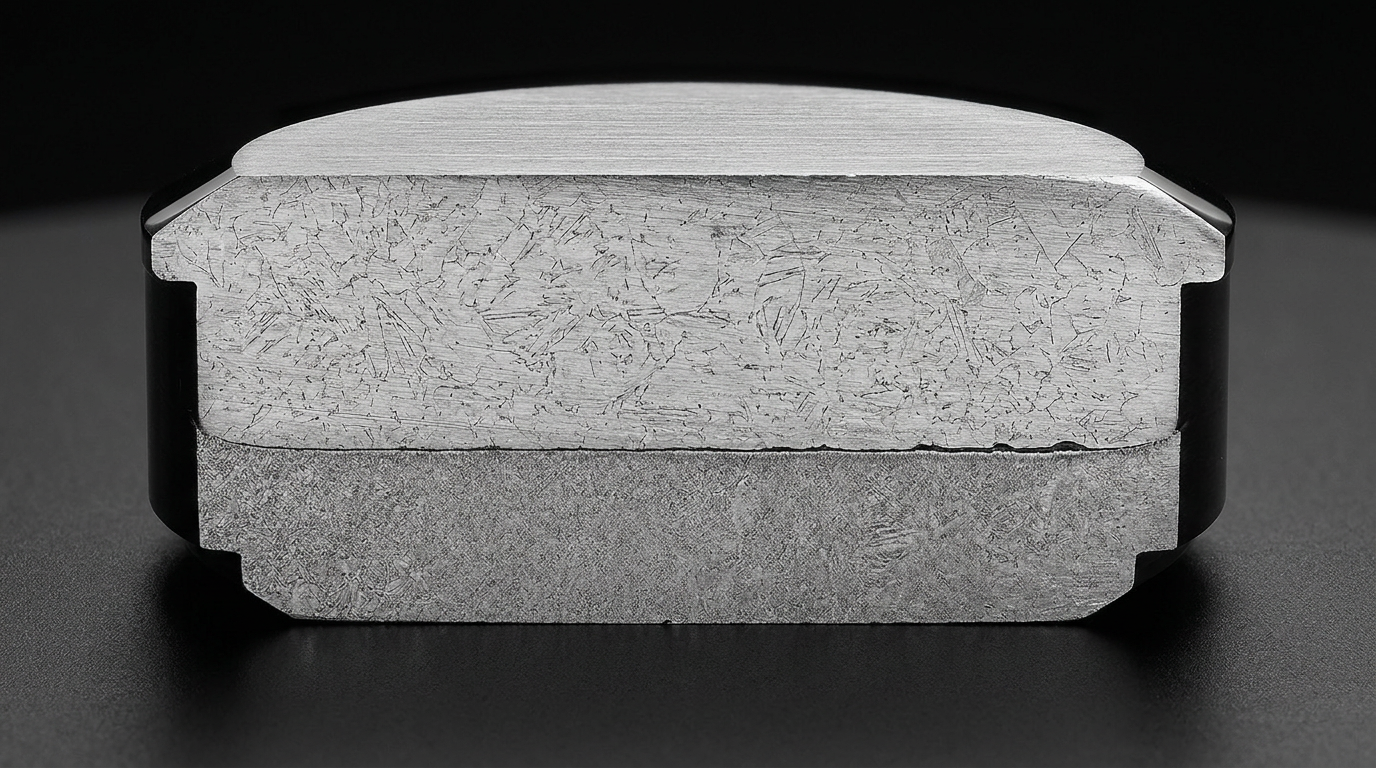
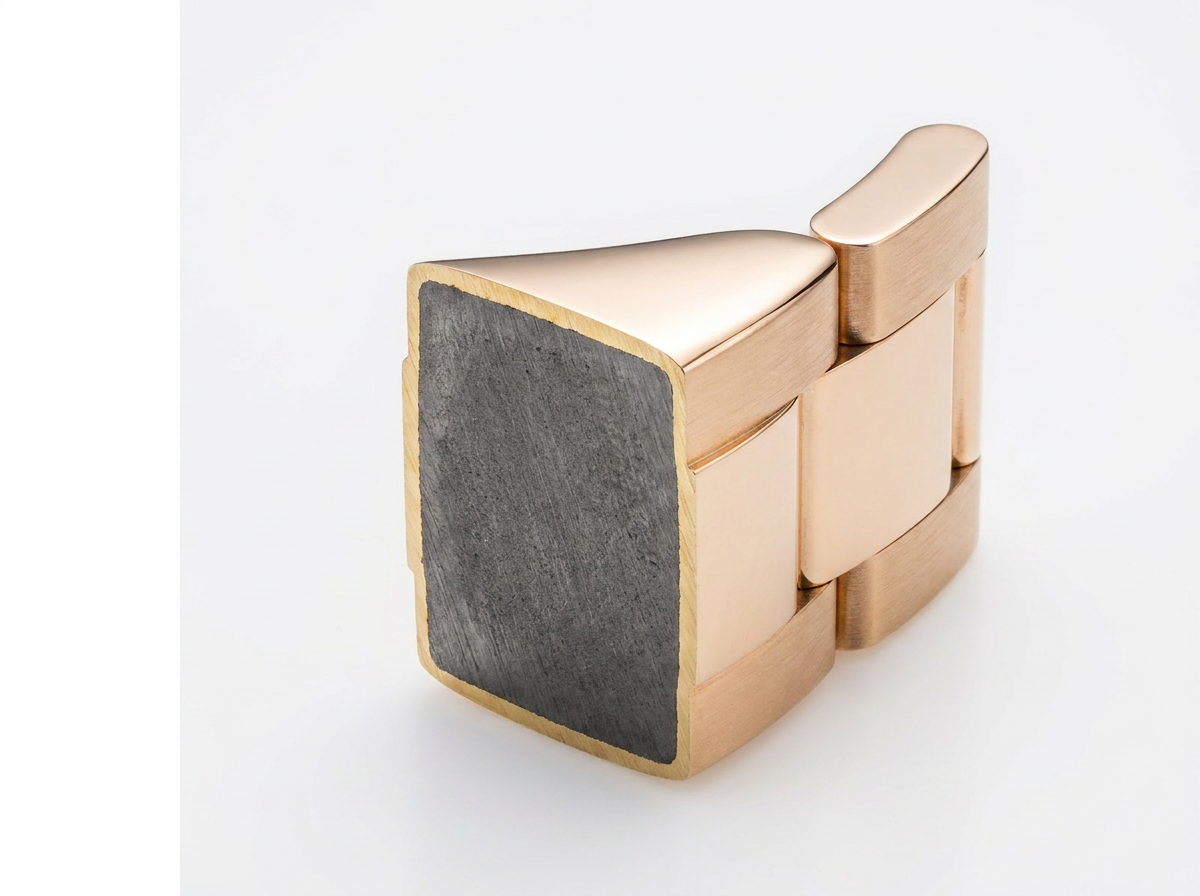
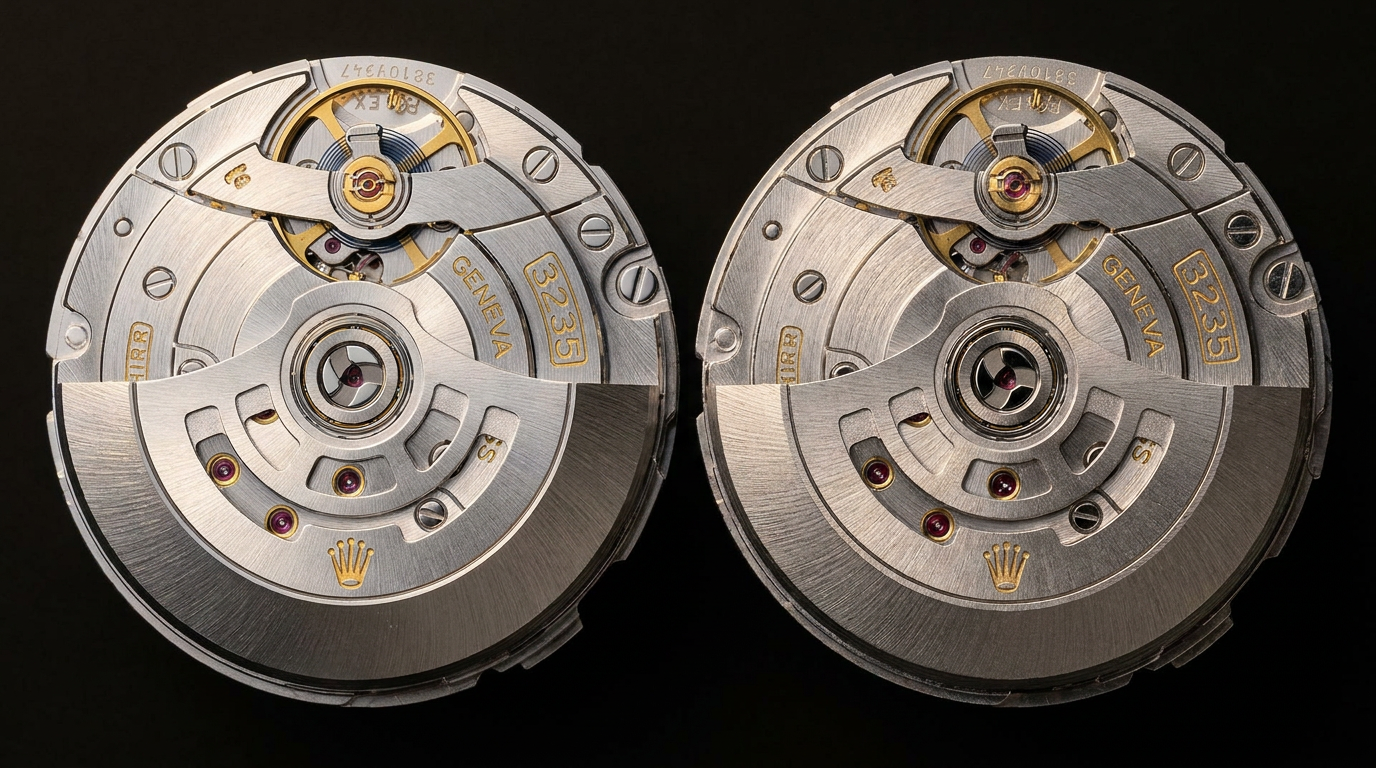
To defeat heft-based authentication, tungsten alloy inserts replicate the density of 18-carat gold and platinum. Internally, Dandong and Shanghai foundries supply reverse-engineered calibres—Dandong 4130, VS3235—delivering authentic beat rates, hairspring dynamics, and 72-hour power reserves. Annual output is estimated at 30 to 40 million units, sustained by the “Hydra Effect”: raids on dominant players simply disperse talent and machinery into decentralised networks.
Leading coordinators such as Clean Factory (CF) and VS Factory (VSF) function less as fixed facilities than as project orchestrators. They source components from specialised micro-suppliers and assemble in rotating clean-rooms, rendering traditional enforcement ineffective. This resilience reflects adaptive industrial logic: when cultural demand for luxury aesthetics outpaces authorised supply, markets—legal or otherwise—fill the void with optimised efficiency.
Behavioural Inversion and the “NWBIG” Ideology
The singularity has triggered a profound inversion. Historically, counterfeits served aspirational entry for those excluded from genuine markets. Affluent collectors now drive demand for top-tier replicas under the “NWBIG” (Not Worth Buying In Genuine) ideology. With dimensional and mechanical parity achieved at $500–$800, the calculus of acquiring a $15,000–$30,000 genuine reference appears irrational for daily wear. Collectors therefore bifurcate consumption: vaulting authentic, appreciating assets for capital preservation (and guarding them in a bank vault) while deploying flawless decoys to mitigate violent theft risk.
This separation severs the traditional link between aesthetic possession and wealth signalling. Luxury horology’s intrinsic value migrates from physical metallurgy to cryptographic provenance. The clone does not merely imitate; it exposes the extent to which modern luxury has become a narrative asset. Behavioural economics explains the shift: as replication technology compresses perceived risk, cultural capital concentrates in verifiable origin stories, hardening premia for documented, forensically pristine specimens.
Institutional Vulnerability and Defensive Premiums
Bolt articulates the new hierarchy of fear: “Of course, now the pieces that I am most afraid of are the pretty cost-effective fakes… They are astonishingly good, and I find them harder to detect without really going to town than a much more expensive watch.” Even luxury conglomerates feel the pressure. Bolt recalls a meeting with the CEO of the Richemont Group seeking protocols for service centres to distinguish genuine from counterfeit pieces under repair.
In response, brands have introduced Certified Pre-Owned (CPO) programmes, creating closed-loop chains of custody. Grey-market buyers willingly absorb a 20 to 30 percent “authenticity tax” for manufacturer-verified trails—paying explicitly for institutional assurance amid pervasive doubt. This premium is not frivolous but rational: in the Super-Clone era, the allocator purchases not the object but the verifiable truth of its genesis.
Strategic Imperative for Investors
The Super-Clone Singularity compels a fundamental repositioning. Investors treat provenance infrastructure as core to capital preservation. Acquisition discipline now integrates multi-vector forensics—XRF, Micro-CT, database cross-referencing—while prioritising CPO channels or unbroken retail histories. Assets lacking these safeguards face structural liquidity discounts; those possessing them benefit from reinforced price floors as cultural suspicion elevates verifiable originality.
Technological diffusion and supply-chain globalisation erode material scarcity, yet they amplify the value of narrative scarcity. As replication approaches perfection, the market prices cultural and institutional authentication ever more aggressively. Allocators who master this dynamic—separating wearable aesthetics from vaulted provenance—capture asymmetric resilience. They avoid the commoditised middle while concentrating on artefacts whose stories remain culturally and forensically uncontested.
In an age of monetary abstraction and industrial replication, enduring horological capital accrues to those specimens whose integrity transcends physical form. The professionalization of the supply chain has, in turn, disciplined the market: authenticity is no longer tacitly assumed but deliberately engineered through forensic verification and institutional safeguards. Those who internalise this imperative secure the most resilient valuations—and the strongest price floors—in the maturing alternative tangible asset universe.
The Service
Validation Trap
In the financialised domain of vintage and pre-owned horology, institutional validation once represented the ultimate imprimatur of integrity. Authorised Service Centres (ASCs) functioned as trusted arbiters, their stamps and invoices conferring legitimacy that translated directly into liquidity and premium pricing. Yet as illicit manufacturing attains N-minus-1 parity, these same institutions have become unwitting vectors for provenance laundering. The “Service Validation Trap” exposes a profound structural vulnerability: the very infrastructure designed to preserve authenticity is now exploited to sanitise industrial counterfeits. Mastering this dynamic is indispensable to pricing risk, safeguarding capital, and navigating an era where cultural faith in institutional seals has been weaponised.
The Mechanics of Provenance Laundering
High-fidelity super-clones, produced by Guangdong syndicates such as Clean Factory and VS Factory, achieve dimensional and mechanical parity with genuine references. Their Dandong 4130 and VS3235 calibres replicate OEM beat rates, power reserves, and geometries with sufficient precision to accept authentic Swiss replacement parts. Beginning around 2017–2018, these assemblies began passing intake protocols at ASCs. Technicians, trained for repair rather than forensic deconstruction, routinely service cloned chassis and issue official documentation. The resulting manufacturer invoice operates as sophisticated money laundering: it erases illicit origins and injects the counterfeit into the secondary market with a 10–15 percent validation premium.
This arbitrage is brutally efficient. A $500–$800 super-clone, once serviced, commands grey-market pricing that belies its engineered deception. The episode reveals a cultural inversion. As replication technology compresses material distinctions, the market has migrated value from the physical artefact to the documentary wrapper. What was once mechanical maintenance has become a high-yield vector for narrative capture, underscoring how sociological reliance on institutional signals creates predictable economic asymmetries.
The Richemont Dilemma and the Collapse of Trust
The roots of this vulnerability trace to the Swiss industry’s own supply-chain decisions. Tom Bolt locates the genesis in the outsourcing of cases, bracelets, and crystals to China’s Pearl River Delta during the late 1980s and 1990s. That transfer of CNC expertise schooled future adversaries. Bolt’s assessment remains uncompromising: “When you party with the devil, watch out.”
The infiltration reached executive levels. Bolt recounts a meeting convened by the CEO of the Richemont Group: “He said, ‘Tom, we need to come up with a way whereby our service centres around the globe know whether or not they are servicing real or fake watches.’” The admission crystallises institutional panic. As super-clones breach the final bastion of brand control, high-net-worth psychology has shifted from confident connoisseurship to forensic paranoia. Luxury horology’s intrinsic worth no longer resides principally in metal or movement—now replicable at industrial scale—but in the cryptographic certainty of origin. The Service Validation Trap has accelerated this migration, hardening cultural demand for provenance that transcends institutional paper.
The Evolution of the Shadow Supply Chain: From Imitation to Singularity
The genesis of the modern “super-clone” is not rooted in isolated criminal piracy, but in the convergence of Swiss technological transfer and pre-existing, state-sponsored industrial infrastructure. While early 2000s replicas—often relegated to “Canal Street” quality—relied on inferior 316L stainless steel and cosmetically altered, off-the-shelf Asian movements, the paradigm shifted radically between 2015 and 2020. Recognizing the geometrical limitations of generic calibers, illicit syndicates like the “Noob Factory” established clandestine relationships with legitimate, state-backed facilities such as the Dandong Watch Factory. By commissioning true 1:1 architectural clones, most notably the Dandong 4130, these networks eradicated historical dimensional flaws—such as the notorious “fat case” Daytona—and transitioned to utilizing the exact 904L “Oystersteel” specified by Swiss manufacturers. This marked the definitive end of superficial aesthetic imitation and the dawn of precise structural replication.
Rather than destroying the trade, massive law enforcement sweeps of the Zhanxi Road markets in 2021 triggered a highly resilient “Hydra Effect.” The dismantling of centralized operations simply scattered sophisticated 5-axis CNC machinery and engineering talent across the Pearl River Delta, giving rise to a decentralized “Project Manager” model dominated by agile syndicates like Clean Factory (CF) and VS Factory (VSF). Today, this shadow economy operates in an era of “Heavy Metal” and algorithmic perfection, utilizing sub-micron 3D laser scanning to reverse-engineer components. To conquer the final tactile frontier—the “heft test” of precious metals—modern syndicates now infuse replica mid-cases and bracelets with high-density tungsten alloys, perfectly mimicking the 19.3 g/cm³ mass of solid 18-carat gold and platinum. The resulting assemblies are not mere fakes; they are hyper-industrialized modular chassis that seamlessly accept genuine Swiss replacement parts, arming the secondary market with composites capable of breaching the highest levels of institutional authentication.
The Institutional Counter-Offensive: A Forensic Firewall
Confronted with existential erosion of trust, luxury conglomerates have pivoted from human judgement to algorithmic defence. A multi-layered forensic infrastructure is emerging:
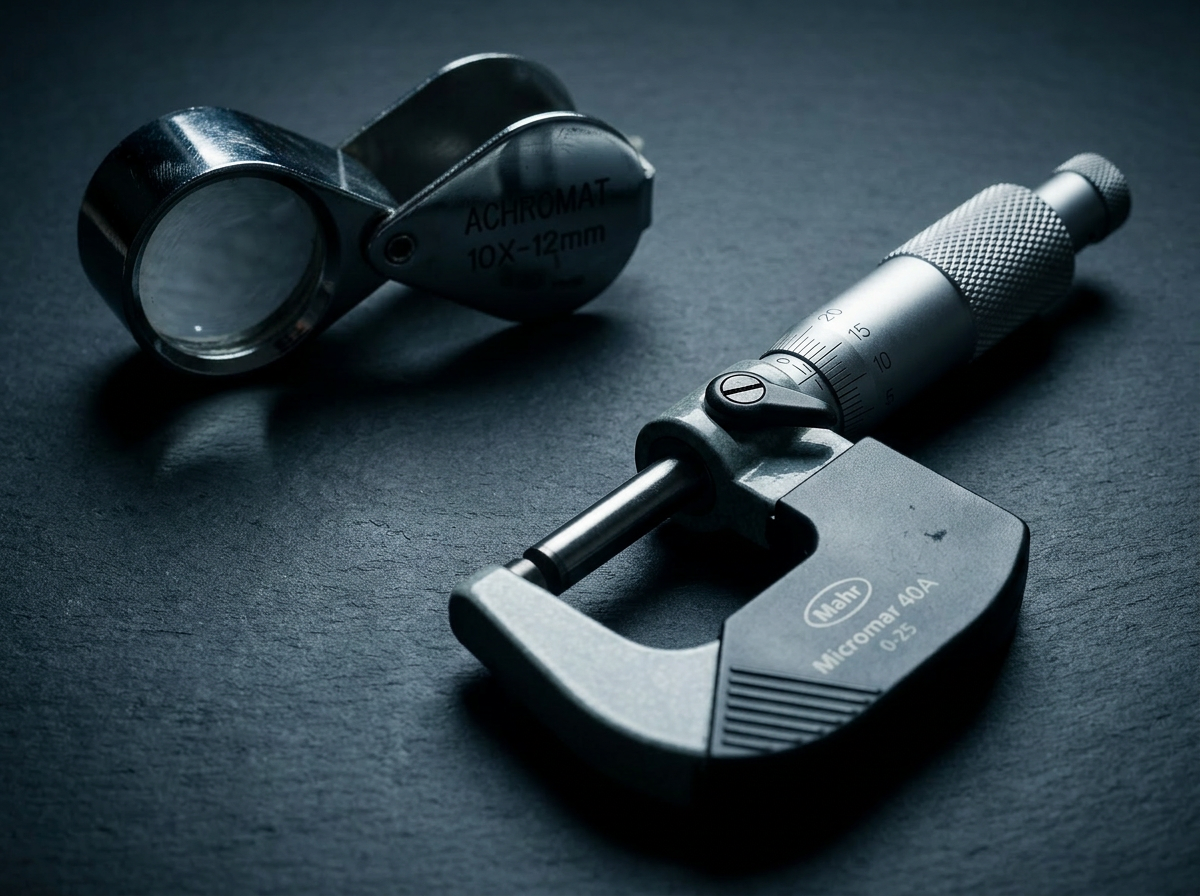
XRF spectrometry now screens for non-OEM metallurgy, exposing tungsten cores engineered to mimic precious-metal density. AI-driven micro-surface analysis platforms, including TrustWatch, deploy convolutional neural networks to detect nanoscale CNC chatter and laser-etch deviations invisible under loupe. Rolex’s 2025 patent (WO/2025/262258) introduces acoustic fingerprinting—wavelet analysis and machine learning that capture unique harmonic decay and escapement signatures, distinguishing organic Swiss resonance from cloned approximations. Richemont’s Enquirus digital ledger, launched in 2023, tracks compromised serials across a centralised database, preventing laundered assets from re-entering circulation.

These countermeasures represent more than technical upgrades. They embody a cultural recalibration: from relational trust in service networks to empirical, data-verified certainty. Each advance raises the epistemological bar, rewarding assets that survive multi-vector scrutiny while imposing steeper discounts on those that cannot.
The Corporate Monopoly on Trust
As the Super-Clone Singularity decimated peer-to-peer confidence in the secondary market, major luxury brands identified an unprecedented opportunity to monopolize trust and reclaim a closed-loop chain of custody. This corporate counter-offensive materialized as the Certified Pre-Owned (CPO) framework. Rolex officially entered the secondary market by launching its CPO program in Europe in December 2022, utilizing the retailer Bucherer as its primary launch partner. The program expanded to North America in May 2023, integrating major retail groups—a move solidified by Rolex’s outright acquisition of Bucherer AG in August 2023.
These programs are engineered to capture massive secondary market revenue by inspecting, restoring, and warrantying vintage pieces with a two-year international guarantee. To discourage immediate retail flipping (arbitrage) and ensure assets possess a traceable history, Rolex strictly limits CPO eligibility to watches that are at least three years old.
The Sanitization of Alteration
While marketed as the ultimate guarantor of authenticity, Bolt questions official manufacturer authentication programs. He argues that rather than protecting the historical record, CPO frameworks are actively damaging the secondary market by “sanitizing” altered watches and authenticating historically incorrect components.
The structural flaw is that CPO standards prioritize functional reliability over chronological preservation. The programs explicitly permit the use of modern “service parts”—such as replacement dials, modern hands, and new bezels—on vintage watches, often without explicitly disclosing these specific alterations to the consumer on the final certificate. This practice effectively creates manufacturer-sanctioned Frankenstein watches, destroying original historical artifacts under the guise of corporate restoration.
Bolt condemns this lack of transparency and its market impact: “When you’re selling stuff that has later replacement faces and you’re not divulging that and saying ‘this watch is a problem, right?’… I just think that they’re messing up the market a bit. That, coupled with the fact that they’re not giving any help unless you really smash down the door, it’s a bad combo, man, and I think it’s disrespectful to the public as well.” He views this corporate behavior as a betrayal of the community that established the asset class, noting, “I think it’s disrespectful to the people that have helped build their brand in the past with vintage stuff going for the money that it has.”
The Empirical Proof: Exposing the Manufacturer-Sanctioned Frankenstein
Independent investigations have consistently revealed that the program not only fails to disclose the presence of modern replacement components, but occasionally authenticates outright fabrications. In August 2023, forensic researcher Jose Pereztroika exposed a Rolex Sea-Dweller Ref. 1665 “Double Red” offered by a prominent Zurich CPO retailer. Despite being certified as genuine and serviced by Rolex Geneva, the watch featured a completely fabricated dial with incorrect typography, font weights, and spacing. Furthermore, flagship retailers like Bucherer routinely offer vintage references, such as the Submariner Ref. 16800, fitted with modern service dials at prices identical to highly coveted original tritium examples. By obfuscating these alterations, the program executes a form of institutional arbitrage, extracting a collector-derived premium without adequate historical disclosure.
This systemic vulnerability extends beyond retail CPO showrooms to the apex of the brand’s heritage operations, the Atelier de Restauration. The collapse of absolute institutional authority is exemplified by the official authentication of high-value Frankenstein constructs, such as a Cosmograph Daytona Ref. 6240 “Paul Newman” that realized 241,300 CHF at Sotheby’s in May 2025. Despite carrying official factory paperwork, the asset featured a forged “Daytona” print on a non-original 1970s dial. Similarly, a Daytona Ref. 6263 “Oyster Sotto” was anchored at auction by a Rolex-issued restoration estimate, despite the manufacturer completely missing a retroactively applied, counterfeit “Oyster” cliché. When collectors detect these anomalies, the market aggressively penalizes the asset—driving what should be a £350,000 valuation down to £200,000 despite the factory seal. Official certification frequently authenticates historically incorrect components, forcing the modern investor to rely on independent forensics rather than corporate assurance.
The Redefinition of Originality
Bolt posits that such actions by the manufacturers suggest either profound corporate incompetence or a deliberate strategy to exert monopolistic control over the secondary market. By officially blessing Frankenstein configurations, manufacturers dilute the historical record. The CPO paradox introduces profound uncertainty: it suggests that to the brands themselves, “originality” is no longer an objective historical and chronological fact, but rather an entirely subjective, corporate-defined metric.
Strategic Implications: The “Certainty Tax”
The Service Validation Trap has rendered standard factory service invoices mere maintenance records rather than definitive provenance. Professional allocators now treat them with measured scepticism, recognising their potential as laundering instruments. Capital is migrating decisively toward closed-loop ecosystems. Certified Pre-Owned (CPO) programmes, with unbroken manufacturer chains of custody, command a 20–30 percent “Certainty Tax”—a premium no longer viewed as retail markup but risk-mitigation in an N-minus-1 world.
This tax is rational market pricing. As replication technology diffuses material scarcity, cultural baselines re-anchor value in institutional and forensic impregnability. Family offices and private banks that embrace the discipline—integrating XRF, acoustic profiling, AI surface mapping, and ledger verification—capture the most resilient price floors. Those who cling to outdated reliance on service stamps expose capital to sudden liquidity evaporation.
Cultural-Economic Synthesis for Investors
The Service Validation Trap illustrates a recurring truth in maturing tangible-asset markets: technological democratisation of production elevates the premium on verifiable narrative. Super-clones do not destroy luxury horology; they purify its economics, stripping value from replicable form and concentrating it in provenance that withstands industrial assault. Shifts—from trust in gatekeepers to demand for cryptographic certainty—create durable moats around forensically pristine specimens.
For serious purchases, the imperative is clear. Due diligence must evolve into a professionalised discipline that subordinates institutional seals to independent, multi-layered validation. Allocators who internalise this reality avoid the trap, favour closed-loop CPO assets, and apply the Certainty Tax proactively. In doing so, they secure asymmetric resilience: watches whose cultural and forensic integrity remains absolute, even as replication approaches perfection.
In an era of monetary abstraction and shadow manufacturing, enduring horological capital accrues to those artefacts whose stories are not merely documented but empirically unassailable. The Service Validation Trap has schooled the market once more: authenticity is no longer conferred—it is engineered through rigorous, forward-looking verification.